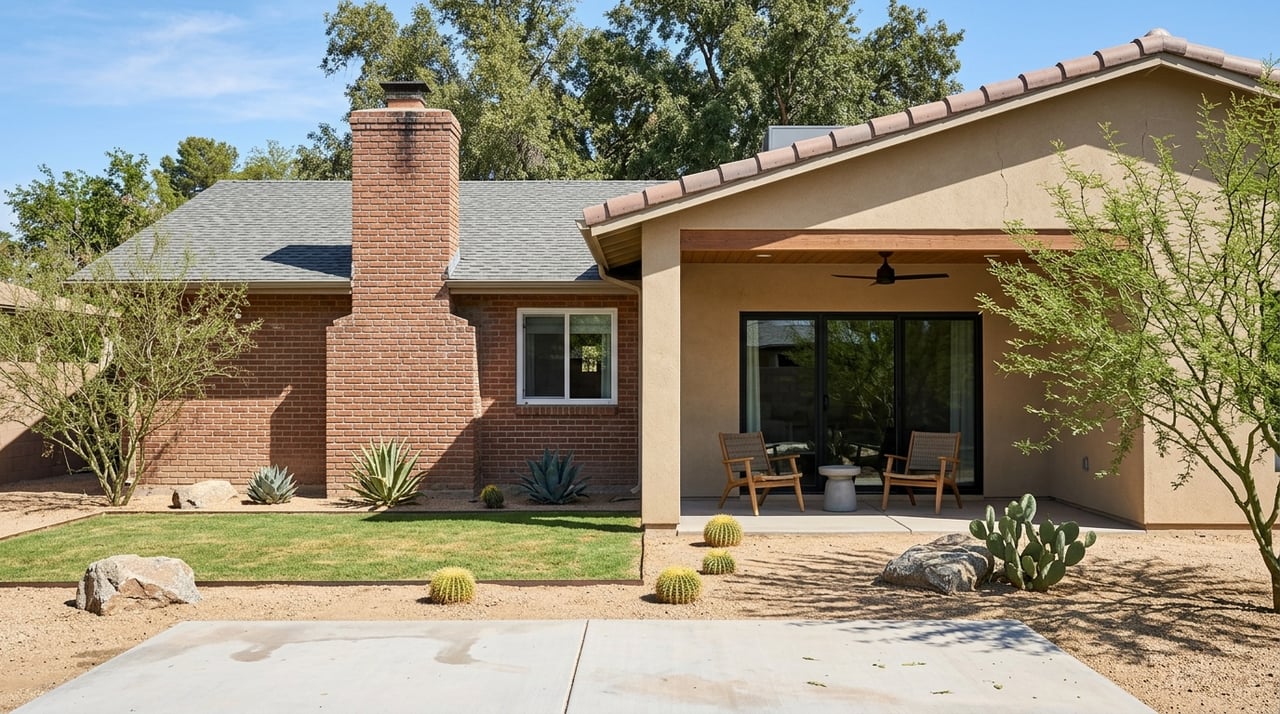
Wondering whether an Arcadia property is best as-is, ready for a remodel, or worth rebuilding from the ground up? You are not alone. In Arcadia, two homes just a few blocks apart can offer very different possibilities, which is why buyers and owners often need more than a quick glance at square footage or curb appeal. This guide will help you understand how Arcadia lots, zoning, overlays, and permit paths shape your options so you can make a smarter move with confidence. Let’s dive in.
Why Arcadia Is Not One-Size-Fits-All
Arcadia has deep roots as former citrus orchard land, and today it is known as an older established neighborhood with a broad mix of housing types. The City of Phoenix also notes that a large share of the housing stock in the area was built between 1950 and 1970. That history is part of what gives Arcadia its character, but it also explains why homes and lots can vary so much.
One of the biggest misconceptions about Arcadia is that every property follows the same pattern. It does not. City zoning maps for the Arcadia Camelback area show a patchwork of districts that includes RE-35, RE-24, R1-18, R1-10, R-O, and C-1, which means remodeling or rebuilding potential can change from one street to the next.
That variation also shows up in lot size. Along parts of Camelback Road, city study materials show parcels ranging from roughly two-thirds of an acre to nearly five acres in one segment, with other sections showing different ranges. In practical terms, that means the buildable area of an Arcadia property is highly specific to the parcel you are looking at.
Start With The Lot
Before you decide between a cosmetic update, a larger addition, or a full new build, the lot should come first. In Arcadia, the lot often tells you more than the current kitchen finishes or flooring ever will. If you skip this step, you can end up designing around assumptions that do not match the property.
The City of Phoenix points homeowners and buyers to My Community Map to confirm exact zoning and any overlay rules. The city also directs owners to the Maricopa County Assessor for official lot size and structure dimensions. Those details are the basic starting point for understanding what may physically fit on the site.
A larger lot does not always mean easier development, and a smaller lot does not always mean limited potential. Setbacks, lot coverage, existing structure placement, and overlay rules can all affect what is realistic. That is why Arcadia is often a block-by-block and parcel-by-parcel decision.
Arcadia Zoning Basics To Know
Zoning is one of the biggest reasons two similar-looking homes can have very different futures. Phoenix describes RE-35 as a district for relatively large urban or suburban lots. RE-24 is different because it is a legacy district that applies only to land zoned RE-24 before September 13, 1981, and it carries a minimum lot area of 24,000 square feet.
For you, that means older Arcadia parcels may not follow the same rules as nearby infill sites. A home that looks like a simple expansion candidate may sit on a parcel with very different requirements than the home around the corner. This is one of the main reasons buyers should review zoning early, not after they fall in love with a floor plan idea.
Arcadia also includes planning layers such as the Arcadia Camelback Special Planning District and the Camelback Road Overlay District. These added layers can affect development expectations in the area. When you are comparing properties, it helps to think beyond the house and focus on the rules attached to the land.
How ADUs Fit Into The Conversation
Accessory dwelling units, or ADUs, are now part of many buyers’ and owners’ plans in Phoenix. The city says that when a lot has no more than one single-family detached primary dwelling, two ADUs are permitted in addition to the primary dwelling unit, with a possible third ADU under certain circumstances. That can make a major difference for households thinking about guest space, flexible use, or long-term property planning.
Phoenix also sets size limits based on the main house and the lot. Each ADU may be up to 75% of the main house’s gross floor area, capped at 1,000 square feet on lots up to 10,000 square feet and 3,000 square feet on larger lots. In Arcadia, where lot sizes can vary widely, that distinction matters.
Even so, an ADU is never just a simple add-on in theory. The lot, zoning, and review path still shape whether the idea makes sense. If an ADU is part of your plan, it should be reviewed at the very beginning along with the rest of the site potential.
When Historic Rules May Matter
Some older Arcadia properties may also have historic considerations. Phoenix uses an HP overlay for historic preservation zoning, and the city says listed properties are protected from demolition and other adverse alterations through a special development review process. That is not the norm for every property in Arcadia, but it is important when it applies.
If you are considering a teardown or a major exterior change, this is a key issue to confirm early. Historic review can affect both timing and what is permitted. For buyers, that means due diligence is especially important before committing to a property based on a future rebuild plan.
Remodel, Expand, Or Rebuild?
Turnkey Homes
A turnkey Arcadia home usually offers the fastest path to move-in and the least construction risk. You are not taking on major design, approval, or permit uncertainty. That can be the right fit when the lot and home already meet your needs.
The tradeoff is flexibility. A turnkey property gives you less control over layout, finishes, and site planning than a remodel or new build. If your vision is highly specific, buying move-in ready may not fully solve for your long-term goals.
Older Ranch Remodels
An older ranch remodel can be a strong option when you love the lot, location, or established neighborhood feel but want a more updated interior. In Arcadia, this often works best when the existing structure is still serviceable and local rules do not heavily limit your intended changes. It can be a smart path for buyers who want character without starting from zero.
This route also tends to be easier to picture emotionally. You can keep some of the home’s original footprint and feel while improving function. Still, the success of a remodel depends on how well the existing structure and site line up with your plan.
Room Additions And Expansions
An addition is often the middle path. It is usually more involved and more expensive than a cosmetic remodel, but less disruptive than tearing a home down and building new. For many Arcadia owners, this is the sweet spot if the current house mostly works but needs more living space.
The key question is feasibility. Setbacks, lot coverage, overlays, and historic rules can all shape whether an addition pencils out. That is why lot review should come before design work.
Tear-Downs And New Builds
A tear-down and custom new build is typically the most complex option. It usually requires demolition, full plan review, and sometimes additional site-related approvals. In Arcadia, this path often makes the most sense on larger lots or on parcels where the existing home is no longer the best use of the land.
The appeal is obvious. You get the most control over layout, design, and how the home sits on the site. The tradeoff is a longer and more involved path before construction even begins.
What Permits Usually Cover In Phoenix
Phoenix requires construction permits for new homes and for many remodels or additions. That includes projects such as garage or carport conversions, porch enclosures, demolition, patio covers, and fences or walls. Some minor work may qualify for an over-the-counter permit, while larger jobs go through plan review.
For a new home or major addition, Phoenix requires a full residential plan submittal. That includes two sets of plans and calculations, a plot plan showing the lot and home orientation, and review for code compliance, design review requirements, and any approved site-plan conditions. If a project also needs grading and drainage or hillside permits, those must be obtained before the building permit is issued.
In short, the bigger the change to the footprint, structure, or site conditions, the more likely you are looking at full review rather than a simpler permit path. That usually means more coordination and a longer preconstruction phase. In Arcadia, that difference can have a real impact on both budget planning and move-in timing.
When The Permit Path May Be Simpler
Phoenix has a Residential Permit by Inspector program, often called RPBI, that can help with some smaller projects. According to the city, the program can cover certain single-story additions and detached accessory structures or ADUs of 1,000 square feet or less, remodels up to 2,000 square feet, and some combination projects that stay within the program’s limits.
But not every project qualifies. RPBI is not available when a project needs hillside, grading and drainage, floodplain, or historic preservation review, when engineered design goes beyond the program’s criteria, or when electrical service changes exceed 200 amps. That means even a project that sounds straightforward may still require a more detailed review path.
A Smarter Way To Compare Arcadia Properties
If you are choosing between homes in Arcadia, it helps to compare them through a development lens, not just a showing lens. The right question is not only whether you like the house today. It is whether the lot and the rules support what you want the property to become.
A simple checklist can help:
- Confirm zoning on Phoenix My Community Map
- Verify lot size and current structure dimensions
- Check for overlay districts or historic preservation status
- Identify whether your plan is a remodel, addition, ADU, or new build
- Estimate whether the likely permit path is streamlined or full review
- Match your timeline and budget to that level of complexity
That process can save you from overpaying for the wrong opportunity or overlooking a property with strong upside. In Arcadia, that kind of early clarity matters.
Why Local Guidance Matters In Arcadia
Arcadia rewards local knowledge. Because lot patterns, zoning, overlays, and permit paths can shift so much from one pocket to another, broad assumptions rarely work well here. Buyers and owners usually benefit most when they evaluate the property, the lot, and the likely review process together.
That is especially true if you are relocating, moving up, or trying to decide whether to renovate or sell. A well-located property with the right parcel profile can open up options that are not obvious at first glance. On the other hand, a beautiful home on the wrong lot for your goals can create avoidable frustration.
If you are weighing an Arcadia purchase, planning a sale, or trying to understand what your current property could support, a neighborhood-first strategy can help you make the right call. For tailored guidance on Arcadia lots, remodel potential, and resale positioning, connect with Bryce Hull.
FAQs
What makes Arcadia lots different from one another?
- Arcadia has a mix of zoning districts, lot sizes, setbacks, and planning overlays, so two nearby properties can have very different remodel or rebuild potential.
How can you check zoning for an Arcadia property?
- The City of Phoenix says the first step is to confirm the exact zoning and overlay rules on My Community Map, then verify lot size and structure dimensions through the Maricopa County Assessor.
When does an Arcadia remodel need a permit?
- Phoenix requires permits for many remodel and addition projects, including garage or carport conversions, porch enclosures, demolition, patio covers, and fences or walls.
Are ADUs allowed on Arcadia residential lots?
- Phoenix says lots with no more than one single-family detached primary dwelling may allow two ADUs, with a possible third under certain circumstances, subject to city rules and size limits.
When is a new build in Arcadia more realistic than a remodel?
- A new build often makes more sense when the lot is large enough to support the plan or when the existing home is no longer the best use of the parcel.
Can historic rules affect an Arcadia teardown project?
- Yes. If a property has historic preservation zoning through the city’s HP overlay, demolition and major exterior changes go through a special development review process.